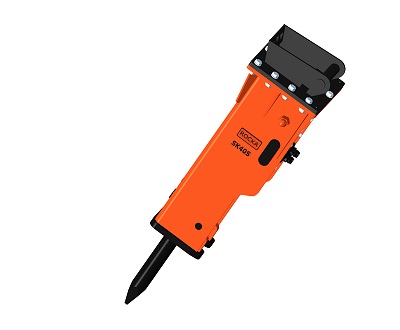
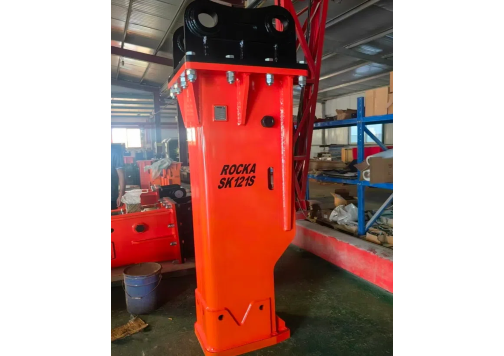
It's a powerful percussion attachment mounted on the end of an excavator's arm (dipper stick). It uses hydraulic power from the excavator to drive a piston that delivers intense, rapid blows to a tool (chisel, blunt, or moil point) to break rock, concrete, asphalt, and other hard materials.
Carrier (Excavator): The base machine that supplies hydraulic flow and pressure.
Power Unit: The hammer's internal mechanism with piston, accumulator, and valves.
Tool (Point/Chisel): The consumable part that contacts the material. Types include:
Moil Point: General-purpose for rock and concrete.
Flat Chisel: For splitting layered rock or slabs.
Blunt (Asphalt Cutter): For pavement and asphalt with less risk of penetrating through.
Side/Bottom Pins & Brackets: Mount the hammer to the excavator arm.
Hoses & Adapters: Connect the hammer to the excavator's hydraulic system (often via a hammer kit/pipe kit).
Wear PPE: Hearing protection is absolutely essential.
Proper Positioning: Break material perpendicularly. Never use the hammer to pry or as a lever.
Don't "Blank Fire": Never operate the hammer without the tool contacting the material. The energy rebounds into the hammer, causing severe damage.
Regular Lubrication: Use a breaker grease (high-EP, adhesive) every 2-4 hours of operation via the built-in autolube system or manually.
Check Tool Bushings: Excessive wear leads to poor energy transfer and damage.
Avoid Extreme Temperatures: Both very hot and very cold conditions require specific operational adjustments and fluids.
Applications
Mining: Breaking oversized ore in underground or surface mines.
Construction: Demolishing concrete for recycling, processing aggregates, or clearing hard ground.
Demolition: Precision breaking of rock or concrete structures.

It's a powerful percussion attachment mounted on the end of an excavator's arm (dipper stick). It uses hydraulic power from the excavator to drive a piston that delivers intense, rapid blows to a tool (chisel, blunt, or moil point) to break rock, concrete, asphalt, and other hard materials.
Carrier (Excavator): The base machine that supplies hydraulic flow and pressure.
Power Unit: The hammer's internal mechanism with piston, accumulator, and valves.
Tool (Point/Chisel): The consumable part that contacts the material. Types include:
Moil Point: General-purpose for rock and concrete.
Flat Chisel: For splitting layered rock or slabs.
Blunt (Asphalt Cutter): For pavement and asphalt with less risk of penetrating through.
Side/Bottom Pins & Brackets: Mount the hammer to the excavator arm.
Hoses & Adapters: Connect the hammer to the excavator's hydraulic system (often via a hammer kit/pipe kit).
Wear PPE: Hearing protection is absolutely essential.
Proper Positioning: Break material perpendicularly. Never use the hammer to pry or as a lever.
Don't "Blank Fire": Never operate the hammer without the tool contacting the material. The energy rebounds into the hammer, causing severe damage.
Regular Lubrication: Use a breaker grease (high-EP, adhesive) every 2-4 hours of operation via the built-in autolube system or manually.
Check Tool Bushings: Excessive wear leads to poor energy transfer and damage.
Avoid Extreme Temperatures: Both very hot and very cold conditions require specific operational adjustments and fluids.
Applications
Mining: Breaking oversized ore in underground or surface mines.
Construction: Demolishing concrete for recycling, processing aggregates, or clearing hard ground.
Demolition: Precision breaking of rock or concrete structures.