Introduction
Fence work takes power. Manual driving is slow. Many ask how to use a hydraulic post driver. It drives posts fast and straight. In this guide, you will learn how to use a hydraulic post driver. We explain tools, steps, and safety. You will also see how reliable equipment like ROCKA hydraulic post driver products help improve efficiency. Learn more about our products.
Understanding Hydraulic Post Drivers
What Is a Hydraulic Post Driver
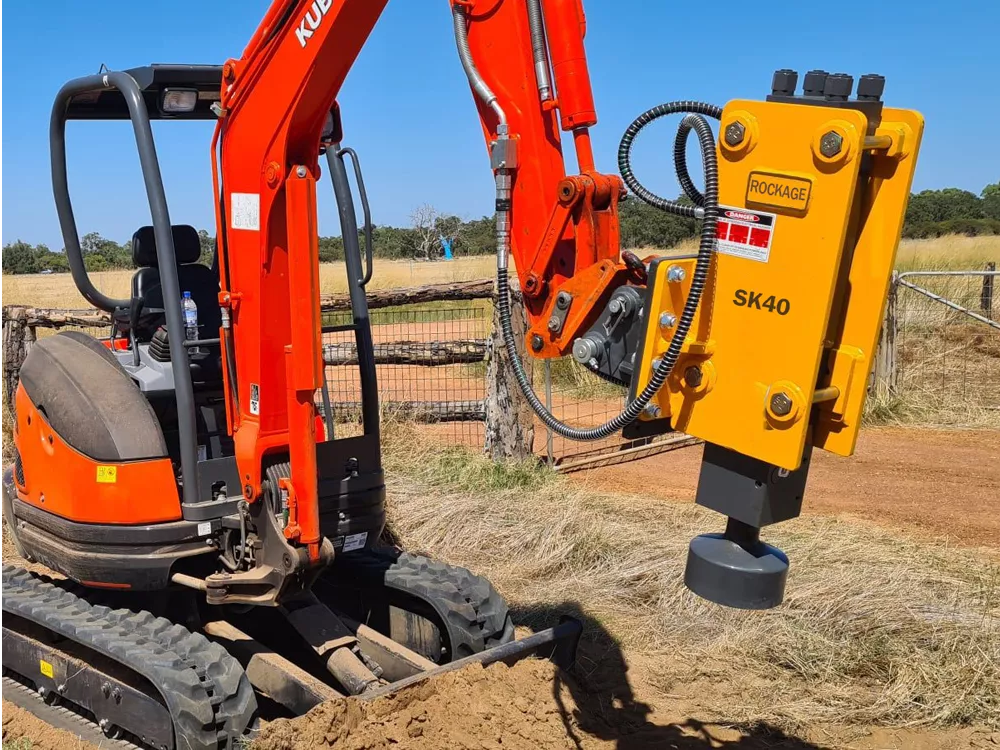
A hydraulic post driver is a mechanical attachment designed to drive posts into the ground using hydraulic energy. It normally connects to machines such as skid steers, tractors, or excavators. The hydraulic system supplies pressure that activates the driver’s internal piston or hammer mechanism. Instead of relying on manual impact tools, the driver uses controlled hydraulic power to generate repeated strikes, allowing operators to install posts more efficiently and with greater precision.
Each impact transfers mechanical force directly to the top of the post. This repeated impact pushes the post deeper into the ground until the desired depth is reached. Because the system delivers consistent impact energy, the post can be driven evenly without excessive tilting or misalignment. This process is both efficient and controlled, which helps ensure consistent installation results even across large projects such as agricultural fencing or construction barriers.
Compared with manual tools, hydraulic drivers provide significantly higher driving force and much better operational control. They reduce installation time while improving alignment accuracy and overall safety for the operator. Modern hydraulic drivers, including equipment designed with high-frequency hammer systems, reinforced steel housings, and advanced vibration damping structures, are capable of maintaining stable power output even under heavy-duty work conditions and difficult soil environments.
Common Applications of Hydraulic Post Drivers
Hydraulic post drivers are widely used across many industries because they provide fast and reliable post installation. Agriculture remains one of the most common application areas. Farmers often install long fence lines to manage livestock, protect crops, or divide large land areas. Using hydraulic drivers allows them to install hundreds of posts quickly while maintaining consistent spacing and depth.
Construction sites also rely heavily on hydraulic drivers. Temporary fencing, safety barriers, and structural support posts must often be installed quickly during early stages of site preparation. Hydraulic drivers help contractors complete these tasks with greater efficiency and accuracy than traditional manual methods.
Landscaping and public infrastructure projects also benefit from hydraulic post drivers. Contractors frequently install signposts, decorative fences, garden structures, or lighting supports. In infrastructure development, the equipment can also assist in installing guide posts, guardrail supports, or small utility poles. Because hydraulic drivers can handle different materials such as wooden posts, steel pipes, and composite poles, they are considered highly versatile installation tools.
Industry | Typical Application | Installation Purpose |
Agriculture | Fence posts | Livestock control |
Construction | Safety barriers | Site protection |
Landscaping | Signposts | Public guidance |
Infrastructure | Utility posts | Structural support |
Equipment Required Before Operation
Compatible Machinery
Before learning how to use a hydraulic post driver, operators must ensure that the driver is compatible with the host machine. Most hydraulic post drivers are attached to skid steers, excavators, or tractors that are equipped with auxiliary hydraulic systems. These machines provide the hydraulic pressure and flow rate necessary to operate the driver’s hammer mechanism.
The hydraulic system must generate sufficient pressure to lift and drop the internal piston repeatedly. If the machine’s hydraulic output is too low, the driver may not produce enough impact force to drive posts into dense soil. On the other hand, excessive hydraulic flow may cause unnecessary stress on the attachment components. Therefore, verifying hydraulic specifications is an important step before beginning any installation work.
Many professional hydraulic drivers use universal quick-attach brackets that allow them to connect easily with different machine models. This design increases equipment flexibility and allows contractors to use the same driver attachment across multiple machines on the job site.
Hydraulic System Components
The hydraulic system that powers a post driver typically includes several essential components. The hydraulic pump is responsible for generating fluid pressure. It pushes hydraulic oil through hoses and into the driver system. The hydraulic fluid then travels through control valves and enters the hydraulic cylinder that drives the hammer mechanism.
Inside the cylinder, the pressurized fluid forces the piston upward. When pressure is released or redirected, gravity and hydraulic force cause the piston to fall rapidly. This downward motion generates the hammer strike that transfers energy to the post.
Control valves regulate fluid direction and flow, allowing the operator to start or stop the hammering process smoothly. Together, these components form a closed hydraulic circuit that delivers stable and repeatable impact energy during operation.
Component | Function | Importance |
Hydraulic Pump | Generates fluid pressure | Power source |
Hydraulic Fluid | Transfers pressure | Energy transmission |
Hydraulic Cylinder | Converts pressure to motion | Impact generation |
Control Valve | Controls flow direction | Operational control |
Tip: Always verify the hydraulic flow requirements of the post driver before installation. Incorrect hydraulic flow can reduce efficiency or damage equipment.
How to Use a Hydraulic Post Driver Step by Step
Attach the Driver to the Machine
The first step in using a hydraulic post driver is attaching the driver securely to the host machine. Most attachments use a quick-mount plate or universal bracket system. The mounting frame locks onto the machine’s loader arms or excavator boom, creating a stable connection between the driver and the machine.
After attaching the driver, operators should carefully inspect the mounting points. All locking pins, bolts, and brackets must be properly secured. A stable attachment ensures that the driver remains aligned during operation and prevents unwanted movement that could affect installation accuracy.
Connect Hydraulic Hoses
Once the attachment is mounted, the hydraulic hoses must be connected to the machine’s auxiliary hydraulic ports. These hoses carry pressurized hydraulic fluid from the machine to the driver’s internal hydraulic system.
Proper hose connection is essential for safe and efficient operation. The hoses must be tightly secured and positioned so they will not be pinched or stretched during machine movement. Once connected, the hydraulic system can supply the power needed to operate the hammer mechanism.
Position the Post Correctly
The operator must then position the post vertically at the desired installation point. Accurate alignment is critical for ensuring that the post enters the ground straight. The driver head should be centered directly above the top of the post.
Many hydraulic post drivers include guide sleeves or alignment brackets that hold the post in place during the driving process. These guides prevent the post from shifting sideways and help maintain a vertical installation angle.
Activate the Hydraulic System
Once the post is aligned, the operator activates the auxiliary hydraulic controls from the machine’s cab. Hydraulic pressure lifts the piston inside the driver. When the pressure is released, the piston falls rapidly and strikes the driver head.
This hammering action occurs repeatedly, often several hundred times per minute. Each strike transfers energy to the post, gradually pushing it deeper into the ground.
Drive the Post to Required Depth
The driver continues striking the post until the desired depth is reached. During this process, the operator should observe the post alignment and adjust machine positioning if necessary.
After the post reaches the correct depth, the operator stops the hydraulic flow and lifts the driver away from the post. The machine can then move to the next installation location.
Step | Action | Result |
Step 1 | Attach driver to machine | Secure installation |
Step 2 | Connect hydraulic hoses | Power supply ready |
Step 3 | Align post | Correct vertical placement |
Step 4 | Activate hydraulic system | Impact force generated |
Step 5 | Drive post to depth | Stable installation |
Understanding the Hydraulic Driving Mechanism
Hydraulic Pressure Generation
Hydraulic pressure serves as the main energy source for a hydraulic post driver. The host machine’s hydraulic pump pushes oil through the system under high pressure. This pressurized oil flows into the driver’s hydraulic cylinder.
Inside the cylinder, pressure forces the piston upward. When the hydraulic circuit redirects the fluid flow, the piston drops rapidly. This downward movement generates the hammer strike that impacts the driver head.
Because the hydraulic system continuously supplies pressure, the piston can repeat this motion many times per minute. This repeated cycle produces consistent and controlled hammering action that drives posts efficiently into the ground.
Energy Transfer and Impact
Energy transfer occurs when the piston strikes the driver head. The impact energy then travels through the driver head and into the post. From the post, the energy spreads into the surrounding soil.
Each impact compresses the soil around the post, creating a compact and stable foundation. As the soil becomes denser around the post, it provides stronger resistance against movement, ensuring long-term structural stability.
Hydraulic drivers can deliver hundreds of impacts per minute, allowing posts to be installed much faster than with traditional manual driving tools.
Note: Hydraulic drivers often deliver hundreds of impacts per minute. This efficiency is far greater than traditional manual installation methods.
Safety Guidelines for Using Hydraulic Post Drivers
Personal Protective Equipment
Safety should always be a priority when operating heavy equipment such as hydraulic post drivers. Operators should wear appropriate protective equipment including helmets, safety glasses, protective gloves, and steel-toe boots.
These safety items help reduce the risk of injuries caused by debris, vibration, or accidental equipment movement during operation.
Worksite Safety Checks
Before starting the driver, operators should inspect the worksite carefully. Underground utilities such as water lines, electrical cables, or gas pipelines must be identified before installation begins.
Overhead hazards should also be considered. Maintaining a clear working zone and keeping bystanders at a safe distance helps prevent accidents.
Proper Operating Techniques
Proper machine control plays an important role in safe operation. Operators should maintain stable machine positioning and avoid sudden movements that could misalign the driver.
Smooth hydraulic control ensures consistent hammer impact while reducing stress on mechanical components.
Maintenance and Equipment Care
Routine Inspection
Routine inspection is essential for maintaining the reliability of hydraulic post drivers. Before each use, operators should check hydraulic hoses, fittings, and mounting brackets for signs of wear or leakage.
If any damaged components are detected, repairs should be made immediately before continuing operation.
Lubrication and Cooling
Moving components inside the driver create friction and heat during operation. Applying lubrication to critical parts reduces wear and helps maintain smooth mechanical movement.
Manufacturers often recommend greasing key components after several hours of operation to extend equipment life.
Hydraulic Fluid Monitoring
Hydraulic fluid is essential for transmitting energy throughout the system. Operators should regularly check fluid levels and ensure the oil remains clean and uncontaminated.
Replacing hydraulic fluid according to recommended maintenance intervals helps maintain stable hydraulic pressure and reliable performance.
Conclusion
Learning how to use a hydraulic post driver improves speed and accuracy in post installation. Proper setup, safe operation, and routine maintenance ensure stable results in fencing and construction work. Reliable equipment such as ROCKA hydraulic post driver products offers strong impact power, durability, and machine compatibility, helping operators complete projects efficiently and with confidence.
FAQ
Q: What is a hydraulic post driver?
A: A hydraulic post driver is a machine that uses hydraulic force to drive posts into the ground quickly and accurately.
Q: How do you use a hydraulic post driver safely?
A: To use a hydraulic post driver safely, attach it correctly, align the post, operate the hydraulic controls steadily, and wear proper protective equipment.
Q: Why use a hydraulic post driver instead of manual tools?
A: A hydraulic post driver installs posts faster, improves alignment, and reduces physical labor compared with manual post driving methods.
Q: What maintenance does a hydraulic post driver require?
A: A hydraulic post driver requires regular inspection, proper lubrication, and checking hydraulic hoses and fluid to maintain stable performance.


